
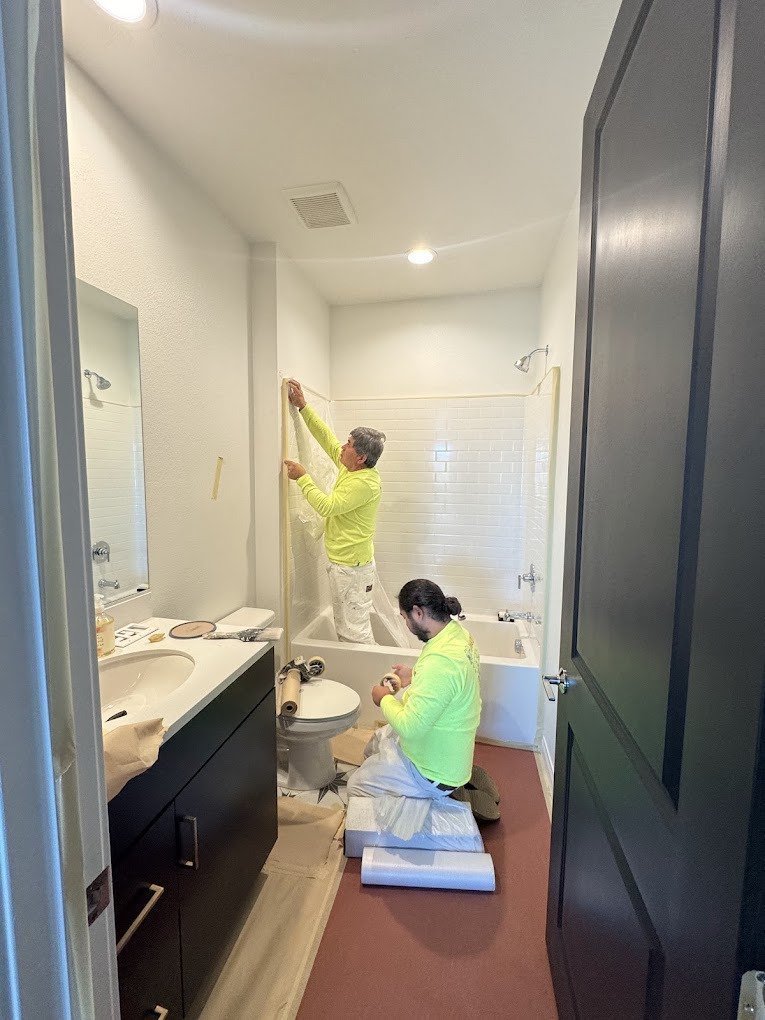
A fresh interior. A workable daily routine.
Condo & Townhome Painting in Santa Monica
Your living room can be a work zone without turning the whole home upside down. Start with the rooms, access rules, and everyday routines that matter to you.
You want fresh walls, but your desk is in the living room and there's no spare garage for the furniture. Condo and townhome painting in Santa Monica needs a plan for living in the space, not just a list of paint colors. The route from your front door to the kitchen matters as much as the first wall we roll.
Our starting point is Santa Monica, where compact units, older interiors, and open living areas call for different prep. A long wall beside a bright window can show every old patch. A shared hallway can turn a simple delivery into a building-management question. We look at both before writing the scope.
The room you need tomorrow comes first
Picture a Santa Monica homeowner with a video meeting in the morning, a dining table pressed against the wall, and a bedroom that needs to stay usable. That's a planning example, not a customer story. Starting every room at once would leave that homeowner with nowhere comfortable to land.
Instead, name the rooms you need each evening. Decide which spaces can be cleared fully and which need a staged approach. A room-by-room plan should say when furniture moves, when repair dust is produced, and when the next space opens for work. Small homes need this conversation early.
Can you stay home while the painting happens? Often, but that depends on the products, ventilation, repair work, and your own sensitivities. Low odor doesn't mean no exposure. Talk through children, pets, asthma, and work-from-home needs before choosing an occupied-home schedule.
- A protected route to the bathroom and kitchen
- A place for pets away from tools and wet paint
- Agreed rooms for furniture staging
- Daily cleanup and safe access discussed before work
Old patches show up when coastal light hits the wall
Fresh color won't flatten a raised drywall seam or hide the edge of an old repair. We look for nail holes, loose paint, dented corners, and patches with a different texture. Repairs need to dry, be sanded as appropriate, and receive primer where the surface or coating calls for it.
On long walls, review repairs with light coming across the surface. A sample seen straight on can miss the ridge you'll notice from the sofa. Full-wall repainting often gives a more even result than scattered touch-ups, especially when the existing paint has aged or its sheen is unknown.
In older buildings, ask about possible lead before disturbing existing coatings. Where lead assessment or regulated work is needed, the scope should identify a qualified professional and the required methods. Don't let a quick sanding allowance skip that conversation.
Choose the finish where you actually live
A washable matte or eggshell may suit living rooms where you want gentle reflection and practical cleanup. Doors and baseboards often benefit from a harder trim coating. Bathrooms need a product suited to the room's moisture exposure, together with working ventilation. Paint won't cure an unresolved leak.
Test color beside your flooring, counters, and existing cabinets. Coastal daylight can make a cool white feel sharp, while evening lamps can warm the same sample. A soft neutral can connect a small living and dining area; one darker wall can work if you like it in both daylight and lamplight.
Keep cabinet painting separate from a walls-and-ceilings price. Degreasing, adhesion prep, door handling, and curing are their own work. If the kitchen is part of the project, agree on which appliances and storage areas remain accessible.
A useful estimate lists the little things
Ask for walls, ceilings, doors, trim, and closets to be named separately. The scope should describe repairs, primer needs, finish coats, product and sheen selections, protection, and cleanup. Your floor area alone doesn't describe tall ceilings, crowded rooms, or a home full of detailed trim.
Building rules belong beside the painting details. Confirm work hours, parking, delivery access, and whether the association wants contractor documents. Interior color decisions may be yours, but entry doors, exterior trim, and shared surfaces can follow different rules. Check the governing documents rather than guessing.
Before handoff, walk the rooms in normal light. Look at repaired areas, ceiling lines, door edges, and floors after protection is removed. Keep the paint labels for later maintenance, and follow the product's curing instructions before washing walls or pressing furniture against them.
Questions about repainting a lived-in Santa Monica unit
Will I need to move all my furniture out?
Not necessarily. The plan depends on room size, furniture weight, and how much open floor space is available. Discuss who moves each item and whether some pieces need temporary storage. Small valuables and fragile items are best removed before work begins.
How can I keep my home office usable?
Choose the office as a scheduled work area, rather than letting it become the default staging room. Tell us which meetings or quiet hours you need. Repair work can still be noisy, so an occupied-home plan should be honest about disruption.
Why do my wall touch-ups look shiny?
New paint can reflect light differently from an older coating, even when the color name matches. Patch absorption, application method, and sheen can all affect the result. Repainting the wall from corner to corner may be a better choice than another small touch-up.
Do I need permission to repaint inside my condo?
Check your association's documents and current contractor rules. Interior walls may not require color approval, while work hours and shared access still have restrictions. Entry doors and exterior-facing surfaces can have separate approval requirements.
What should I do about a stained bathroom ceiling?
Find out whether the stain comes from an active leak, condensation, or old damage. A leak or ongoing moisture problem needs to be corrected before paint prep starts. Once the surface is dry and sound, the scope can address repairs and a suitable stain-blocking primer.
How long will my repaint take?
The walkthrough should set the schedule. Furniture staging, repairs, drying, building hours, and the number of surfaces all change it. Ask which rooms will be available each evening rather than relying on a generic day count.
Tell us which rooms you need to keep open
Send your room list, a few photos, and your building's work rules to Anaya's Painting. We'll discuss a written scope for your Santa Monica condo repaint, including surface prep, furniture protection, and the order of work.
Plan my occupied-home repaint