Garage & Concrete Floor Coatings
Epoxy Flooring in Santa Monica, Brentwood, & Manhattan Beach
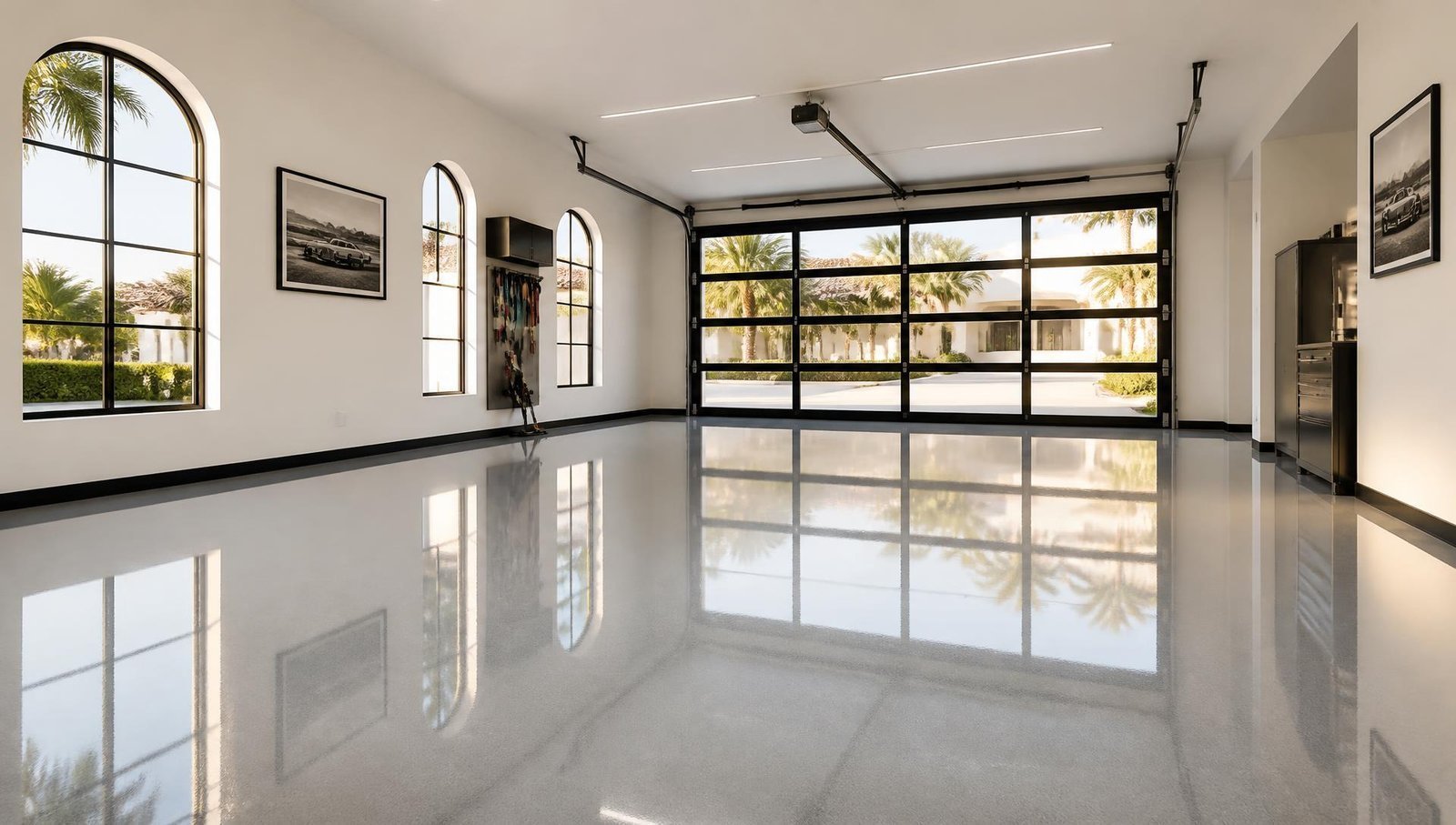
Ground concrete, filled cracks and a coating that keeps its shine under tires, tools and spills.
Floors That Take a Beating
Professional Epoxy Floor Coatings
A garage floor is the hardest working surface on the property. Hot tires, dropped tools, oil, salt air off the coast and a hose every few weeks. Epoxy flooring turns that dusty slab into a hard, sealed surface you can sweep clean, and it does it in a color and finish that matches the rest of a nice house instead of looking like a parking structure.
Here is the part most people never hear. Almost every failed epoxy floor failed at the concrete, not at the coating. Somebody rolled product over a slab that was still sealed, still oily or still holding moisture, and a year later it peeled off in sheets. We grind every floor down to bare, open concrete first. That one step is the whole difference between a coating that lasts and a coating that lifts.
Homeowners, property managers and shop owners around the Westside call us for garages, storage rooms, wine cellars, laundry rooms and warehouse floors. Same grinder, same prep, same attention whether the space is 400 square feet or 4,000.
- Diamond ground to bare concrete, never just etched
- Cracks and pits filled with structural repair mortar
- Moisture tested before a drop of resin goes down
- Clear topcoat rated for hot tires and UV
Tired of a dusty, stained slab?
Send us the square footage and a couple photos. We will walk you through your color and finish options.
How We Work
Our Process
Most epoxy jobs are a two or three day project. Here is what happens on each of those days and why every step matters.
- 1
Test the slab before we quote
We check for moisture, old sealers and oil staining. Those three things decide which primer and which resin system your floor actually needs, and they are the reason two garages the same size can price differently.
- 2
Clear the space and protect the walls
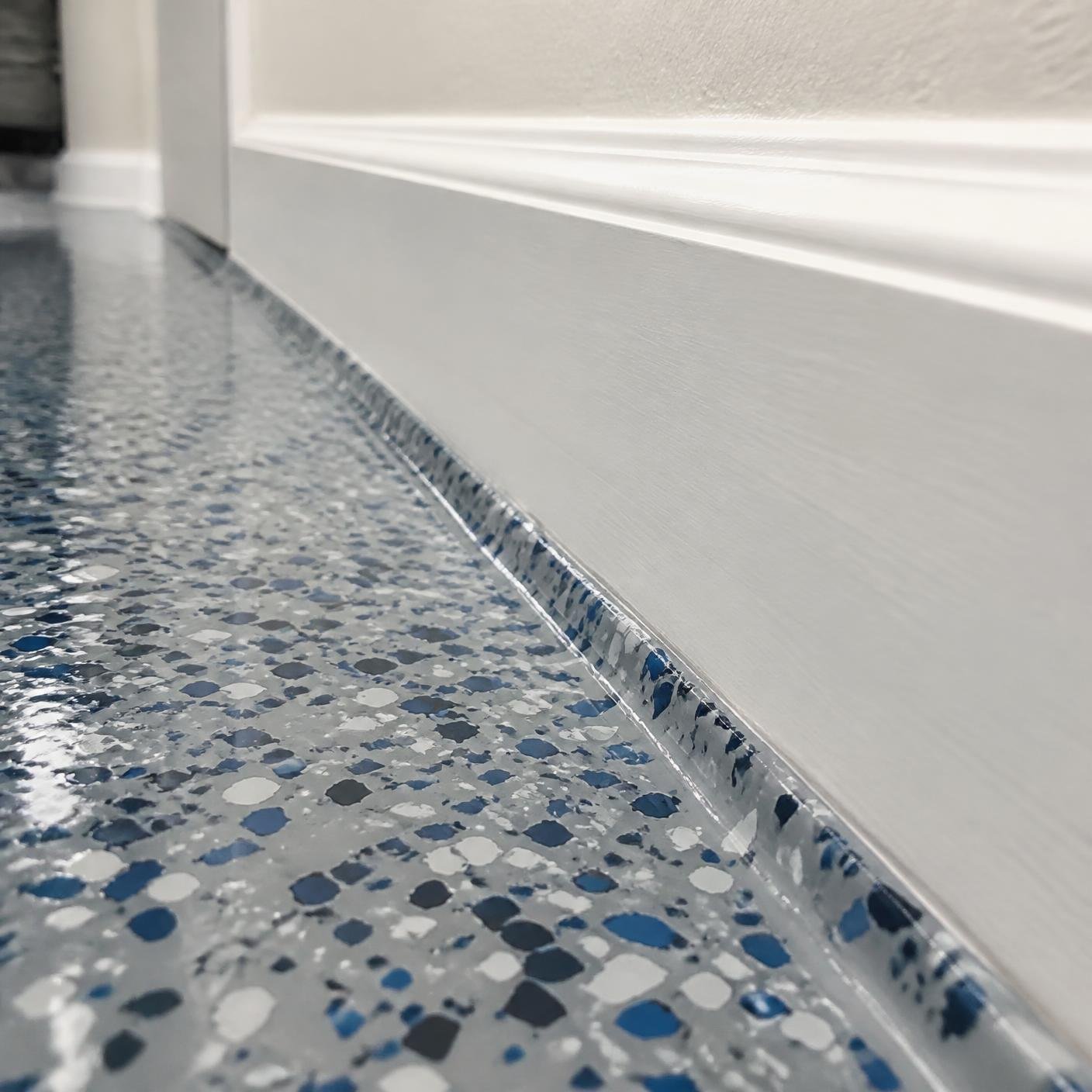
Everything comes off the floor. Baseboards, drywall and door jambs get masked because grinding throws dust and the coating goes on wet and self leveling.
- 3
Diamond grind the concrete
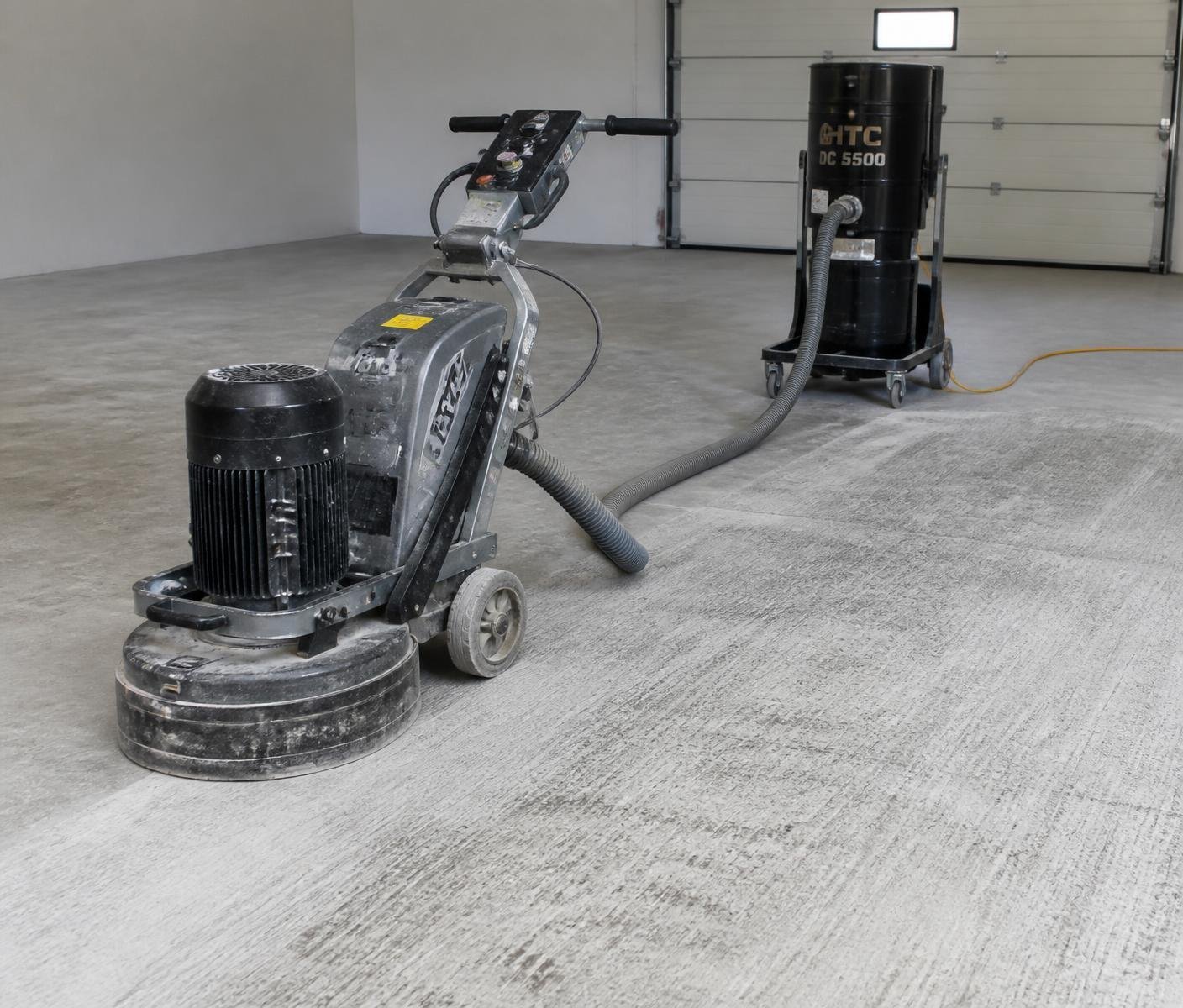
A walk behind grinder with vacuum attached opens the surface to a proper profile. Edges and corners get done by hand. The slab ends up dull and porous, which is exactly what epoxy needs to bite into.
- 4
Repair every crack and pit
Cracks get chased open and filled with a structural patch, spalled areas get rebuilt and control joints get treated. Skipping this is how you end up with a shiny floor that still shows every old flaw.
- 5
Prime, then broadcast the base coat
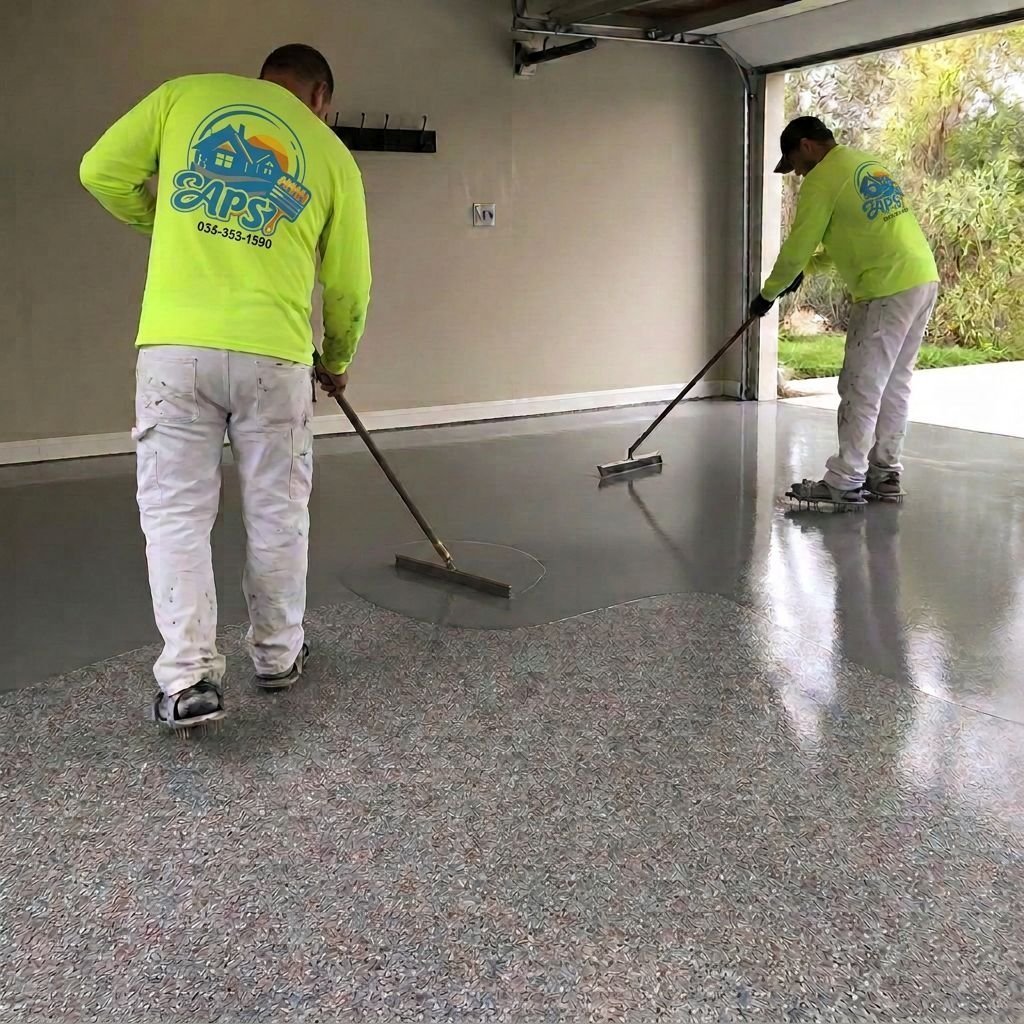
A moisture tolerant primer goes down first. Then the pigmented base coat, and if you picked a flake finish, we broadcast the vinyl chips into it while it is still wet so they lock in permanently.
- 6
Scrape, vacuum and clear coat
The next day we knock down the loose flake, vacuum the floor and roll two clear coats. You can walk on it in about 24 hours and park on it in about 72, once the resin has fully cross linked.
Recent Floors
Epoxy Flooring Photo Gallery
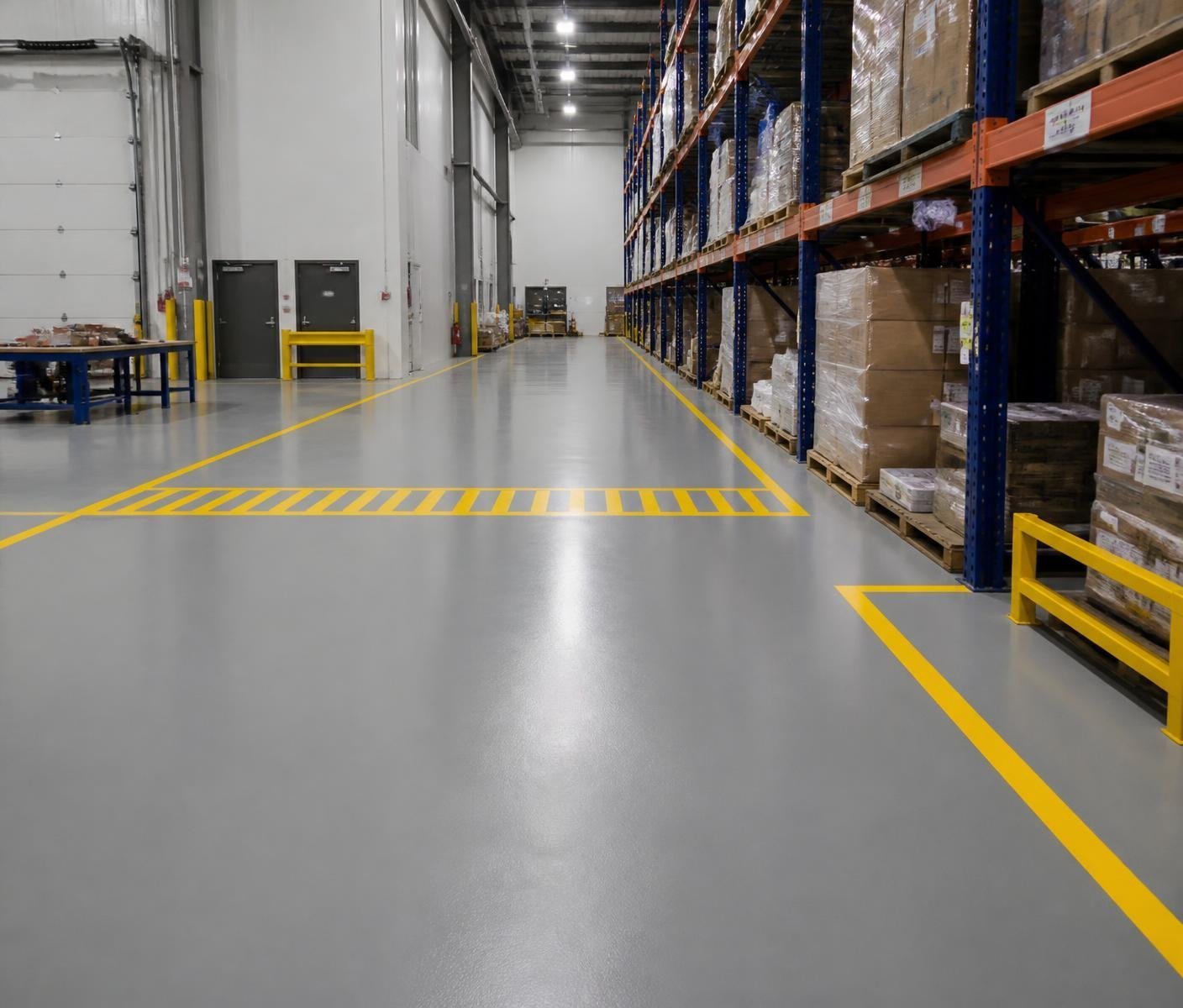
Garages, shops and commercial slabs we coated around Santa Monica and the Westside.
Attention to Detail
The Preparation Process
With epoxy, prep is not a step before the job. Prep is the job. Roughly two thirds of our time on site is spent getting the concrete right.
- Moisture test on the slab so we pick the right primer
- Old paint, mastic and sealer ground completely off
- Diamond grinding with a vacuum so dust stays out of your house
- Hand grinding along walls, corners and around posts
- Cracks chased open, filled and sanded level with the slab
- Oil spots degreased and burned out before priming
- Walls, jambs and thresholds masked before the resin goes down
More From Our Crew
Featured Painting Services
Interior Painting
Walls, ceilings, trim and doors painted room by room with tight lines.
Explore Interior PaintingExterior Painting
Stucco, siding and eaves prepped for coastal sun and morning fog.
Explore Exterior PaintingCabinet Painting
Doors sanded, primed and sprayed for a smooth kitchen finish.
Explore Cabinet PaintingCommercial Painting
Storefronts, restaurants and warehouses painted around your hours.
Explore Commercial PaintingOffice Building Painters
Lobbies, suites and corridors refreshed after hours.
Explore Office Building PaintersNew Construction Painting
Sprayed interiors and trim delivered on the builder calendar.
Explore New Construction PaintingClient Reviews
What Neighbors Say About Our Floor Coatings

Gabriel Rivera
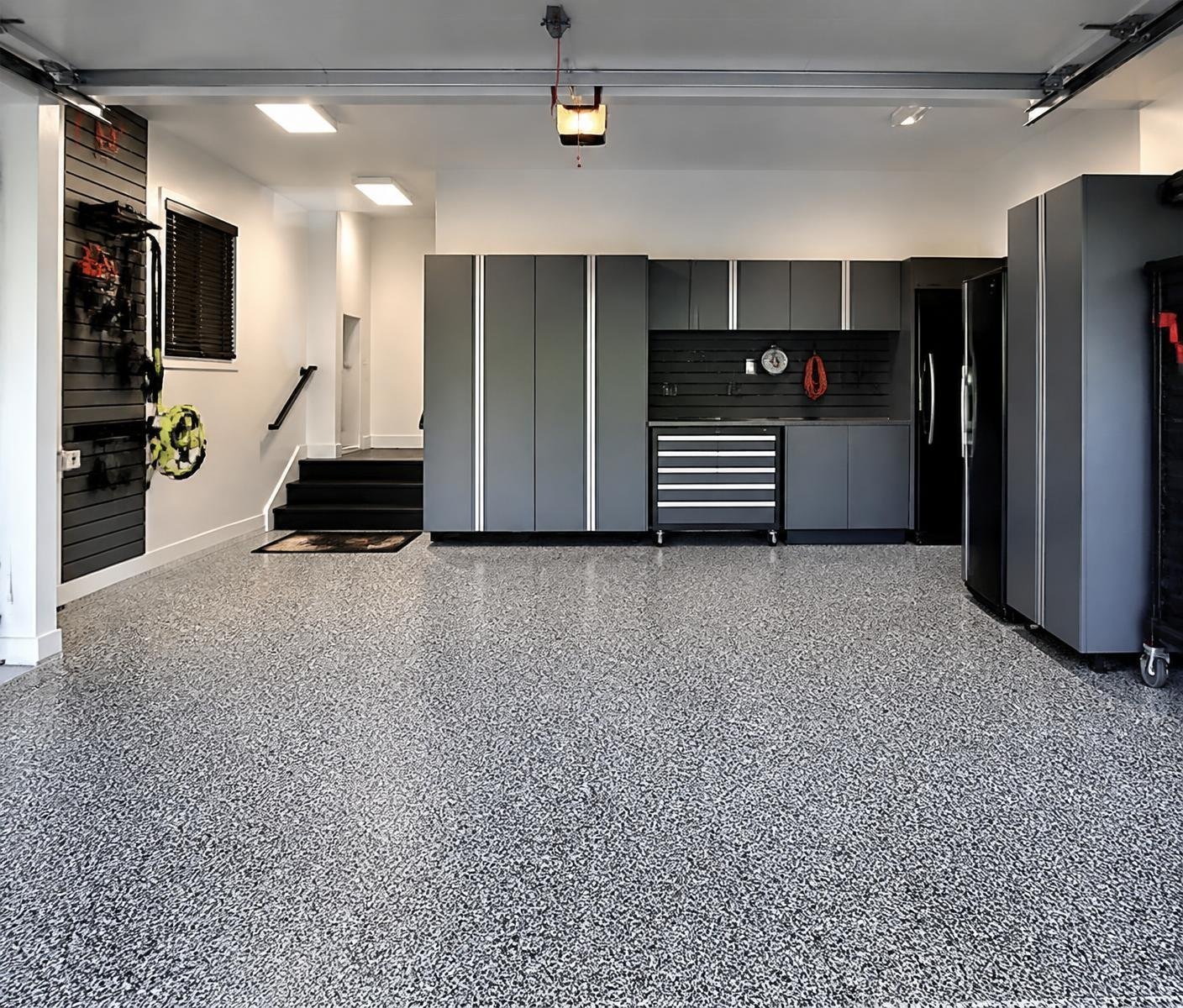
“Our garage slab was stained from twenty years of oil and had two long cracks running through it. They ground the whole thing down, filled the cracks and laid a gray flake floor that honestly looks better than the floor inside the house. Hosed it off after a beach weekend and it came right back to new.”

Martha Georgie
“I had a coating put down years ago by somebody else and it peeled within a season. This crew explained exactly why that happened, showed me the difference after they ground the concrete, and the new floor has not lifted anywhere. The dust control during grinding was better than I expected too.”

Andres Jr
“We coated the shop floor at our Marina del Rey location over a long weekend. They worked around our schedule, striped the walkways the way we asked and had us open Monday morning. Two years of forklift traffic and it still cleans up with a mop.”
Good Questions
Epoxy Flooring FAQs
How long does an epoxy floor last?
On a residential garage that was ground properly and coated with a polyaspartic or urethane topcoat, we expect 15 to 20 years of normal use before you would think about recoating. Commercial floors with forklifts or pallet jacks run shorter, usually 8 to 12 years, and the wear shows in traffic lanes first rather than all at once. What kills a floor early is almost never the traffic, it is bad prep underneath. A coating that was rolled over sealed or damp concrete can start lifting inside a year no matter what product went on top.
Why do you grind the concrete instead of acid etching?
Acid etching sounds easier and it is cheaper, but it only bites the very top skin of the slab and it does nothing about old sealers, paint or oil. Diamond grinding physically removes that layer and opens the pores of the concrete so the primer can soak in and grab. It also lets us see the real condition of the slab, including cracks that were hidden under old coating. When you hear about an epoxy floor peeling up in sheets, an etch instead of a grind is usually the reason.
How long before I can walk on it and park on it?
Foot traffic is usually fine about 24 hours after the final clear coat, in socks or soft shoes. Rolling a toolbox or light furniture back in is fine at about 48 hours. Parking a vehicle is 72 hours minimum, and we would rather you give it a full five days in cooler weather. The reason is hot tire pickup. Warm tires sitting on a coating that has not fully cross linked can pull the finish right off the slab, and that is a repair nobody wants to make.
What color and finish options do I have?
Three main directions. A solid color coat is the cleanest and most modern, usually in a light or medium gray. A flake system broadcasts vinyl chips into the base coat, which hides dirt and adds grip, and we can blend the chip colors to work with the house. A metallic system gives you that swirled, almost marbled look that shows up in high end car garages and wine rooms. Sheen runs from satin to high gloss. If you have kids or you hose the floor down often, we usually steer you toward a flake system with a satin clear because it is far less slick when wet.
Will an epoxy floor be slippery?
A high gloss floor with nothing in the clear coat can get slick when water sits on it. We handle that by broadcasting a fine aluminum oxide or polymer grit into the topcoat, which adds traction you can feel with bare feet but does not make the floor hard to sweep. Flake systems already have some texture built in from the chips. Tell us how the space gets used, especially if it is a laundry room, a pool equipment area or a commercial kitchen, and we will spec the grit level to match.
Can you coat a floor with cracks or moisture problems?
Usually yes, but the fix has to happen first. Cracks get chased open with a saw, cleaned and filled with a structural polyurea that flexes with the slab instead of a rigid filler that just cracks again. Moisture is a different conversation. If the slab is pushing vapor from below, which is common in older Santa Monica and Venice properties near the water table, we install a moisture mitigation primer before anything else. We test rather than guess, because coating over an active moisture problem is the fastest way to a bubbled floor.
How do I take care of it once it is done?
It is genuinely easy. Sweep or blow it out, and mop with warm water and a mild cleaner when it needs it. Skip anything with citrus or heavy solvents because those can dull the clear coat over time. Wipe up brake fluid, gas and battery acid reasonably soon rather than letting them sit. Put a mat under a car that leaks. Done that way, the floor keeps its gloss for years, and if a section ever gets damaged we can grind and recoat that area without redoing the whole space.
Let's Give That Slab a Real Finish
Anaya's Painting coats garage and concrete floors in Santa Monica, Brentwood, Manhattan Beach, Marina del Rey and across the Westside. Call us or send a few photos to get started.
1639 11th St, Suite 100, Santa Monica, CA 90404