Patching, Texture & New Board
Drywall Repair & Installation in Santa Monica, Bel-Air, & Cheviot Hills
Cracks, holes and water damage fixed so well you will forget where the patch was.
Walls Made Flat Again
Professional Drywall Repair & Installation
You can spot a bad drywall patch from across the room. It shows as a soft halo around the repair, a shadow line where the mud stopped, or a texture that reads a little different than the wall around it. Paint does not hide any of that. Paint makes it more obvious, because a fresh coat reflects light evenly and every bump underneath shows up.
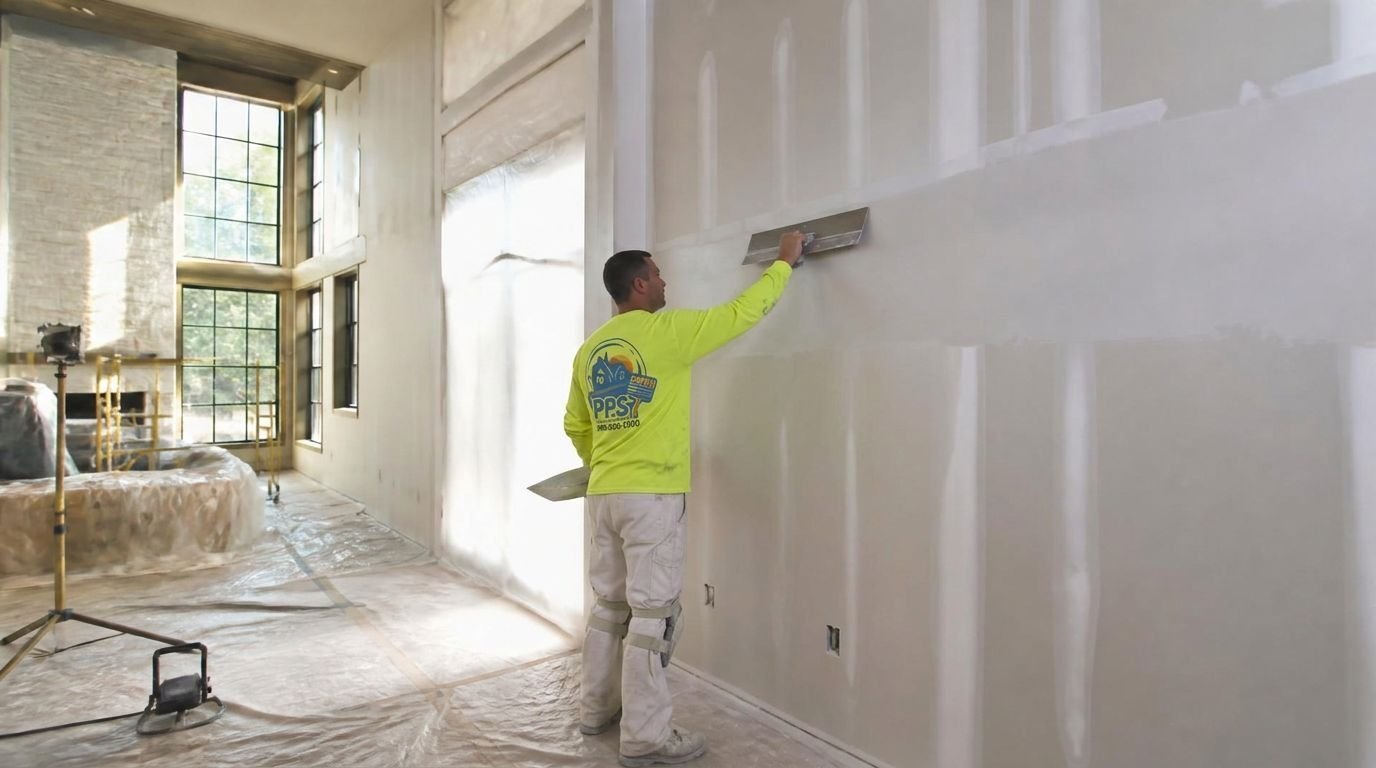
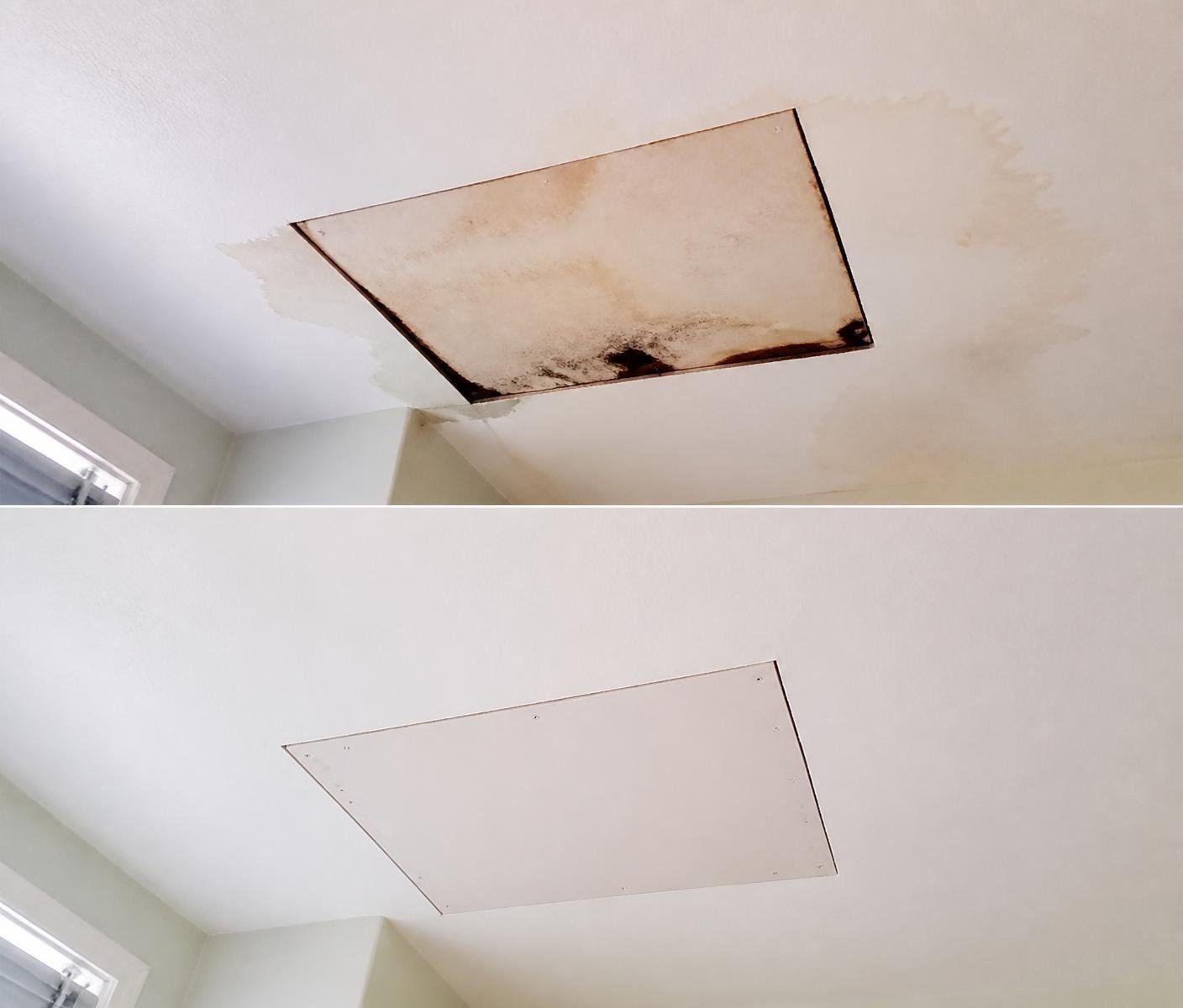
We treat drywall as part of the paint job, not a separate trade you have to schedule around us. Settlement cracks over doorways, nail pops down a hallway, a ceiling stained from an upstairs bathroom, a hole where an old TV mount came out. We cut it back to solid material, back it properly, tape it, feather the mud wide and match the texture so the wall reads as one surface again.
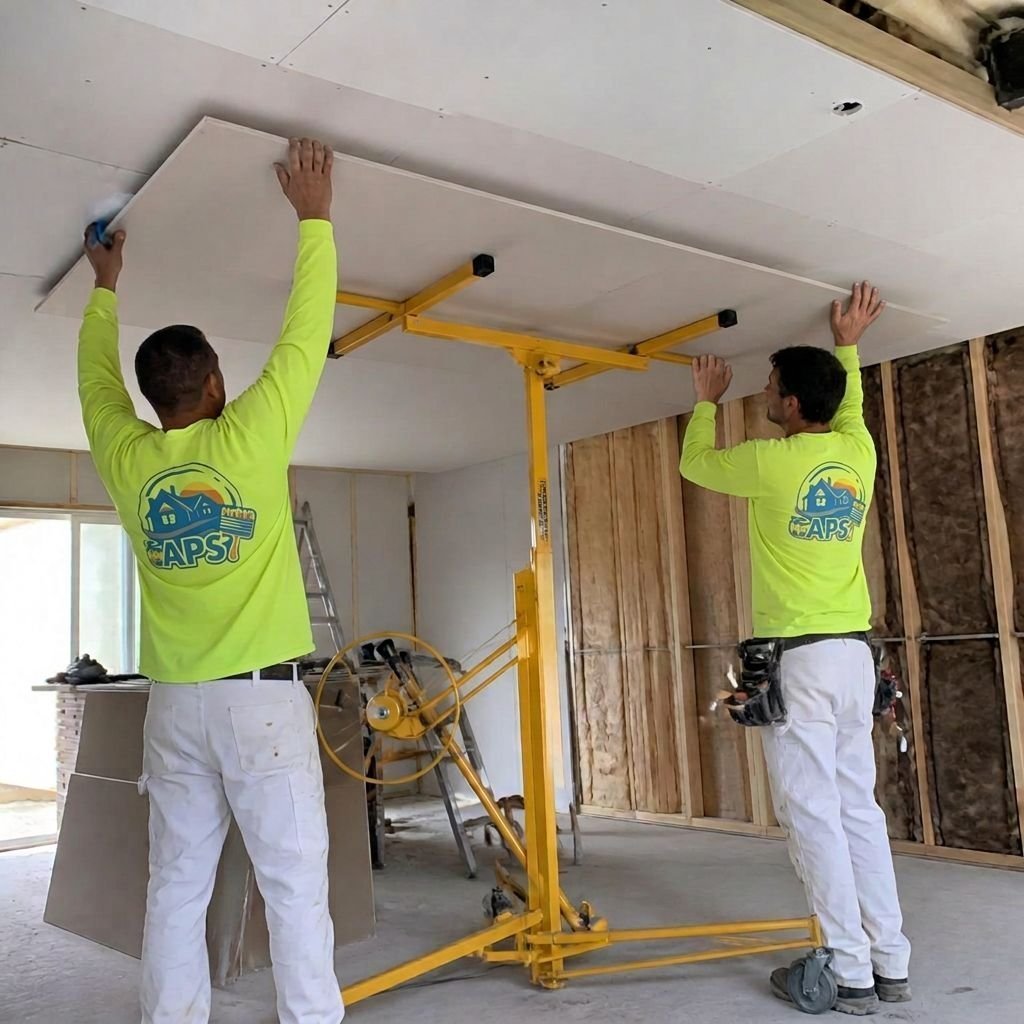
We also hang new board. Garage conversions, a wall that came down during a remodel, a new closet, or a whole room after a leak. Same standard either way, because the finish coat is what everybody sees.
- Damaged board cut back to solid framing
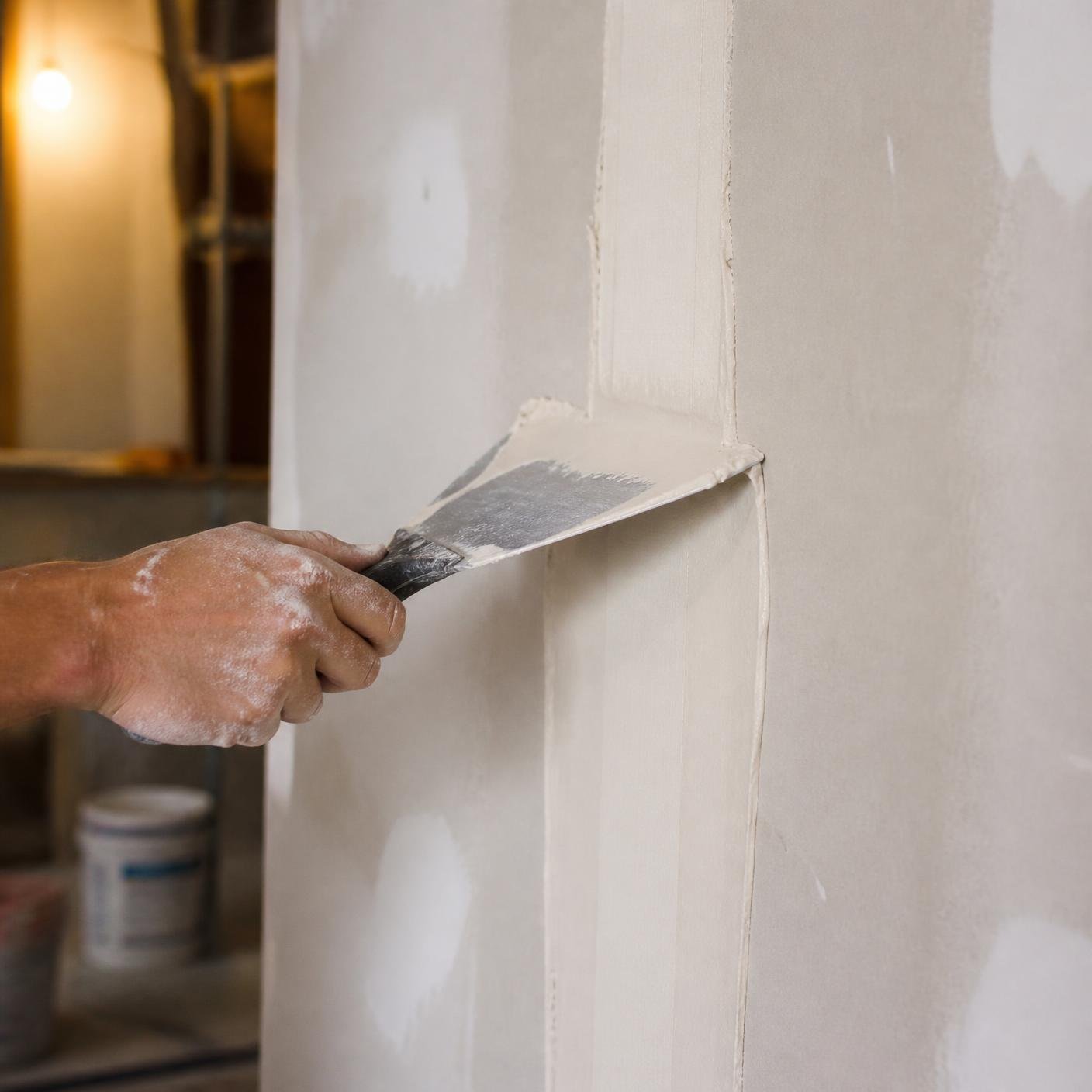
- Three coats of mud, feathered wide and sanded
- Orange peel, knockdown and smooth textures matched
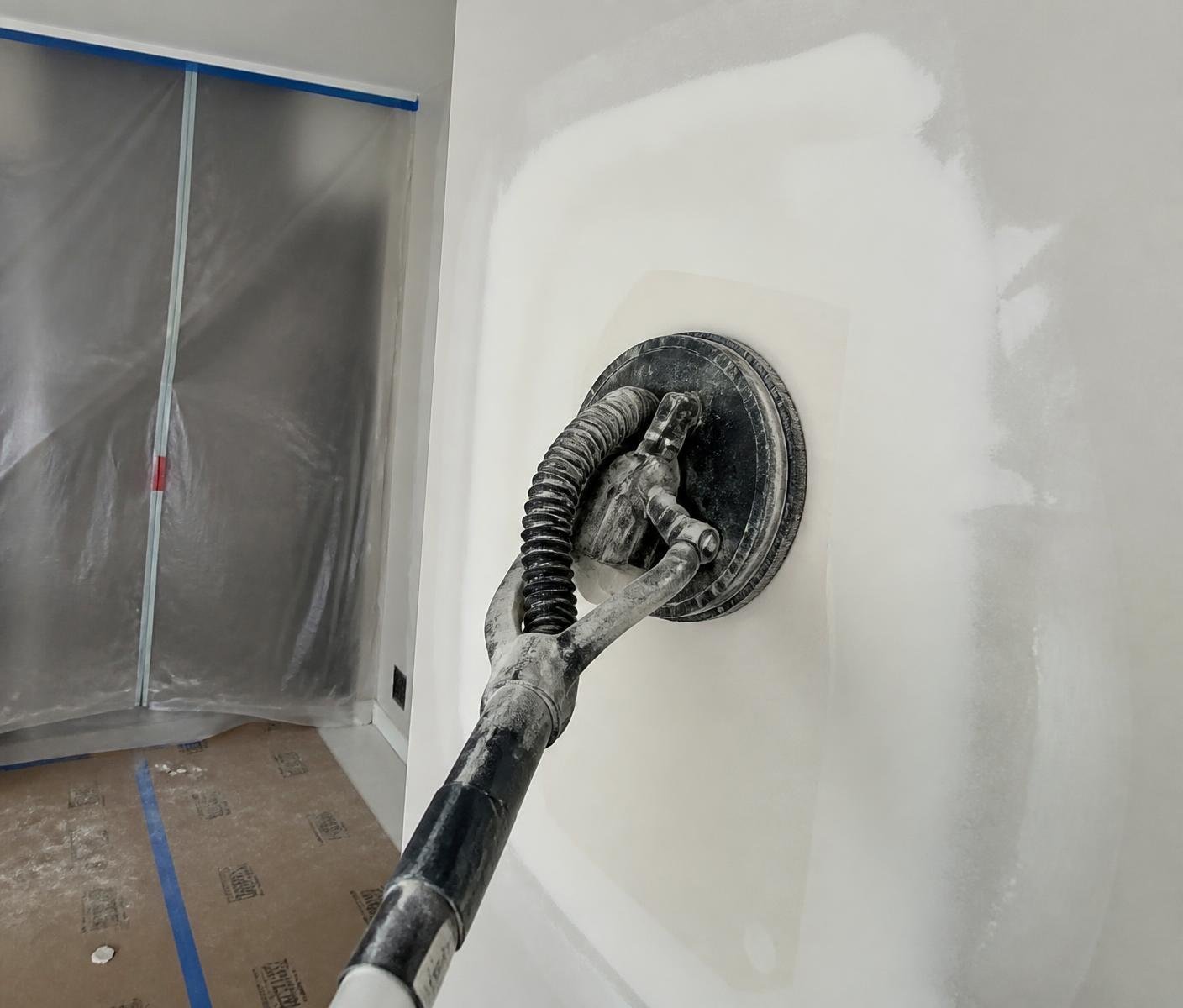
- Dust contained with plastic and vacuum sanders
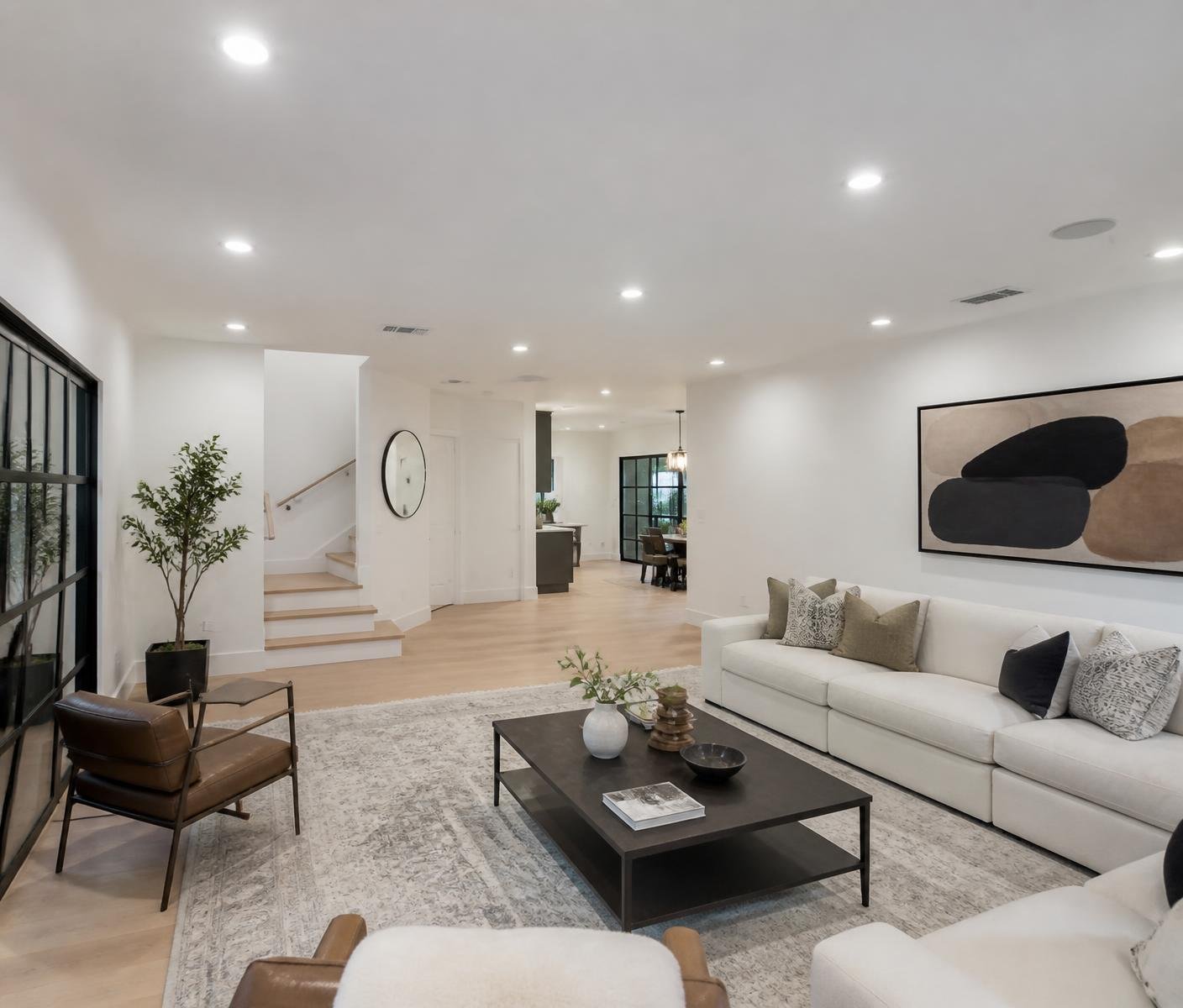
Got damaged walls that need more than a quick patch?
From major drywall repairs and full wall replacements, we repair and install drywall so the finish is flat, smooth, and ready for paint.
How We Work
Our Process
Whether it is one patch or a whole room of new board, the sequence is the same and none of it gets rushed.
- 1
Find out what caused it
A crack that keeps coming back is telling you something. Before we patch, we look for the reason, whether that is a roof leak, a plumbing drip, framing movement or just a doorway that flexes. Fixing the wall without fixing the cause buys you about six months.
- 2
Protect the room
Floors get covered, furniture gets moved and wrapped, and doorways get plastic with a zipper. Drywall dust travels farther than people expect, so containment goes up before the first cut.
- 3
Cut back to solid material
We square the opening and cut back to studs or joists so the new piece has something real to screw into. Soft, wet or crumbling board keeps getting removed until what is left is sound.
- 4
Hang, screw and tape
New board goes in at the same thickness as the existing wall, screwed on a proper pattern. Seams get paper or mesh tape and a bedding coat of setting compound, which shrinks less than premixed mud.
- 5
Three coats, feathered wide
Each coat goes on wider than the last, and the final one can run two or three feet past the repair. That width is the whole trick. It is what lets the eye pass over the patch instead of catching the edge of it.
- 6
Match texture, prime and paint
We sample your existing texture on a scrap piece first, then spray or hand apply the match. Once it is right, the patch gets primed and painted, usually corner to corner so the sheen stays consistent.
Recent Work
Drywall Photo Gallery
Repairs and new board we finished in homes around Santa Monica and the Westside.
Attention to Detail
The Preparation Process
Drywall work makes a mess if nobody plans for it. Here is what we set up before the first knife touches a wall in your house.
- Furniture moved out or wrapped before any cutting starts
- Plastic containment and zipper doors on the work area
- Floors covered with paper and taped at the baseboard
- Vacuum attached sanders to keep dust out of the air
- Damaged board removed back to sound framing every time
- Existing texture sampled and matched on a test piece first
- Patches primed before paint so the repair does not flash
More From Our Crew
Featured Painting Services
Interior Painting
Walls, ceilings, trim and doors painted room by room with tight lines.
Explore Interior PaintingExterior Painting
Stucco, siding and eaves prepped for coastal sun and morning fog.
Explore Exterior PaintingCabinet Painting
Doors sanded, primed and sprayed for a smooth kitchen finish.
Explore Cabinet PaintingCommercial Painting
Storefronts, restaurants and warehouses painted around your hours.
Explore Commercial PaintingOffice Building Painters
Lobbies, suites and corridors refreshed after hours.
Explore Office Building PaintersNew Construction Painting
Sprayed interiors and trim delivered on the builder calendar.
Explore New Construction PaintingClient Reviews
What Neighbors Say About Our Drywall Work

Gabriel Rivera
“We had a slow leak upstairs that ruined a section of our living room ceiling. They cut out the bad board, let it dry properly instead of just covering it, and matched the knockdown texture so well that I honestly cannot find the seam anymore. Painted the whole ceiling after so there was no sheen difference.”

Martha Georgie
“Our hallway in Cheviot Hills had nail pops and two long settlement cracks over the doorways. Another company just mudded over them and they came back within the year. These guys taped the cracks properly and explained why, and two winters later the walls are still flat.”

Andres Jr
“They hung and finished the drywall for our garage conversion, then painted the whole space. What surprised me was how clean it stayed. Plastic up, floors covered, and they vacuumed at the end of every day. The walls came out smooth enough that we skipped texture entirely.”
Good Questions
Drywall Repair FAQs
Can you match my existing wall texture?
Yes, and it is the part of the job we spend the most time on. Most homes around here have orange peel, knockdown or a hand troweled skip trowel, and every one of those varies by who sprayed it and how heavy they were that day. We test the match on a scrap piece of board first, hold it against your wall and adjust the mud thickness and spray pressure until it reads the same. A smooth wall is actually the hardest match of all because there is nowhere for a flaw to hide, which is why smooth repairs get a wider skim coat.
Why do the same cracks keep coming back?
Because the crack was filled instead of repaired. Squeezing spackle into a crack gives you a rigid plug in a joint that is still moving, and the next season of expansion opens it right back up. A proper repair means widening the crack into a V, embedding paper tape or mesh across it in setting compound, then feathering two more coats out wide. If the crack runs diagonally off a door or window corner, that is framing movement, and sometimes the real fix involves addressing what is moving, not just the drywall.
How long does a drywall repair take?
A single small patch is usually a two visit job. Day one is cut, hang, tape and the first coat. Day two, after the mud has dried overnight, is the second and third coats, sanding, texture and paint. Larger repairs or a full room of new board run three to five days because each coat of compound needs real drying time. Anyone promising to cut, mud, texture and paint a repair in a couple hours is skipping coats, and you will see the result the first time afternoon light hits that wall.
My ceiling has a water stain. Do you need to replace the whole thing?
Usually not. If the board is still firm and just discolored, we can seal the stain with a shellac based primer and repaint, because a water stain will bleed straight through regular paint no matter how many coats you put on. If the drywall is soft, sagging or the paper is separating, that section has to come out. Either way the leak has to be fixed and the cavity fully dry before we close it up, and we will tell you honestly which situation you are in rather than covering a wet problem.
How much dust should I expect?
Less than you are picturing, because we plan for it. Plastic containment with zipper doors goes up around the work area, floors get papered, vents in the room get covered so dust does not travel through the HVAC, and we sand with vacuum attached sanders instead of open pole sanding wherever we can. We also vacuum and wipe down at the end of each day rather than letting it build up. You will still want to keep the door closed, but the rest of the house stays livable.
Do you install new drywall, or only repairs?
Both. We hang and finish new board for garage conversions, room additions, closets, ceilings after a remodel and walls that came out during a renovation. That includes the right board for the room, moisture resistant in bathrooms and laundry areas, and fire rated where code calls for it on a garage to house wall. We finish to a level four for textured walls and a level five when the walls are staying smooth or taking a high sheen paint, since that finish shows everything.
Do I have to paint the whole wall after a repair?
We recommend painting corner to corner, and here is why. Even a perfect color match will show as a slightly different sheen where the new paint meets old paint that has aged, been washed and taken years of light. That difference gets more obvious over the following months, not less. Painting the full wall or the full room costs a little more up front but it is the only way the repair truly disappears. On a large wall with a small patch we can sometimes get away with spot painting, and we will tell you when that is realistic.
Let's Make That Wall Look Untouched
Anaya's Painting handles drywall patching, texture matching and new board in Santa Monica, Bel-Air, Cheviot Hills, Venice and across the Westside. Give us a call or send a photo of the damage.
1639 11th St, Suite 100, Santa Monica, CA 90404