
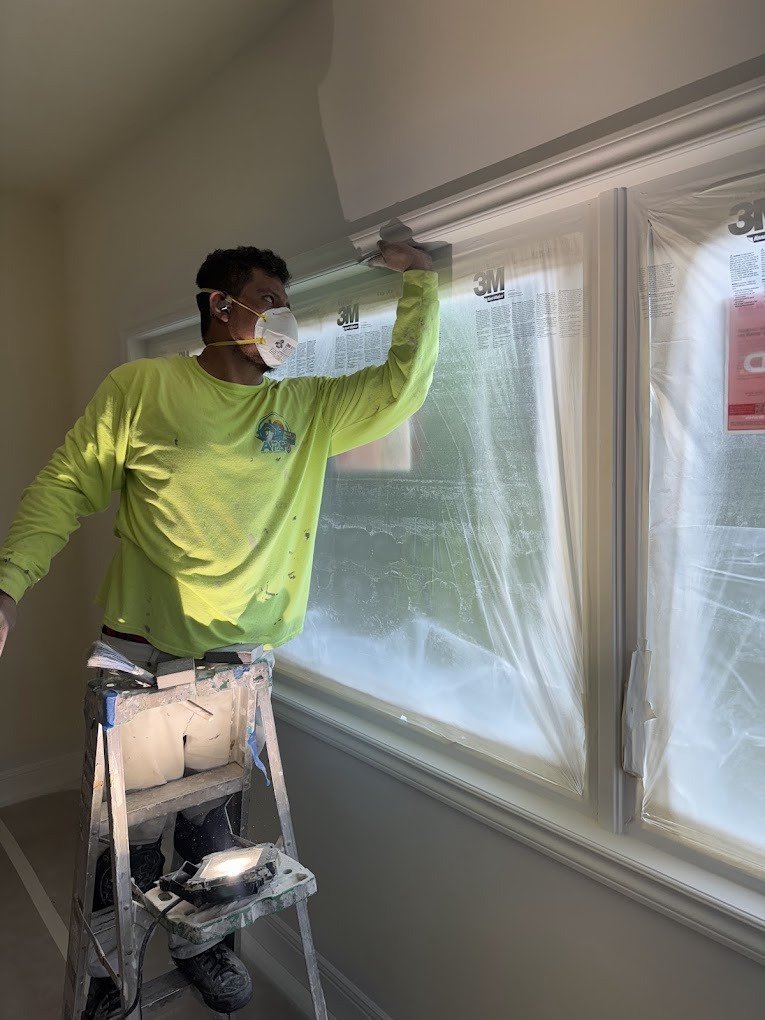
Connected rooms deserve a connected finish plan.
Condo & Townhome Painting in Culver City
Make the stair hall, living space, and bedroom level feel like the same home. Plan repairs, sheen, and trim details together before the first room changes color.
Start with the sightlines. Condo and townhome painting in Culver City works best when the entry, stair walls, and living area are planned together. A freshly painted bedroom can still feel out of place if the hallway is yellowed and the door frames carry old brush marks. You don't have to repaint everything, but you should decide where the new finish stops.
From our Santa Monica base, we work through the practical questions behind a Culver City unit refresh: tall walls, shared access, older coatings, and remodel patches next to untouched surfaces. The goal is a written painting scope that fits your home, whether you're settling in or updating rooms you've lived with for years.
Build the palette along the path through your home
Walk from the entry to the living area and then up the stairs, if your home has them. Note every place where you can see two rooms at once. A neutral carried through those views can make the home feel connected, while a separate bedroom color can give you variety without breaking up the main living space.
Picture a hypothetical Culver City townhome with a bright upper landing and a darker entry below. The same white can look different on each level. Try samples at both ends of the stair wall and beside the floor finish, then look again under evening lights. One sample beside a sunny window won't answer the whole question.
Do the walls and trim have to be the same white? No. A restrained contrast can make door frames read cleanly, while a closer match can quiet a busy hallway. Choose the relationship between surfaces first, then pick products suited to wall washing, doors, and trim wear.
For an open-plan condo, take kitchen cabinets and countertops into the color decision even when they aren't being painted. Warm wood often sits comfortably beside softer neutrals. Cooler stone may need a different white. Use your existing materials as the reference instead of chasing a color trend you don't enjoy at home.
- Entry-to-living-room color transitions
- Upper and lower stair-wall samples
- Trim color beside doors and flooring
- Bedroom changes placed at natural breaks
Treat stair walls, trim, and remodel patches as separate work
Stair walls need safe access and room to work. Tell us whether the stairs are your only route to bedrooms or bathrooms. The plan should describe protection and access without leaving loose coverings underfoot. Tall walls and awkward landings can change the scope even in a home with modest floor area.
Hand contact wears door edges, baseboards, and nearby wall corners. Those surfaces may need cleaning, adhesion prep, small repairs, and their own coating system. Painting over glossy old trim without suitable prep risks a finish that doesn't hold. Doors also need time to dry before being closed against their stops.
If a remodel left patches beside older walls, inspect the texture before choosing paint. Raised seams, rough fill, and shiny repairs can become more obvious under a new coat. Spot primer can address absorption differences, but a texture mismatch may need wider surface work. Ask which repair standard the estimate includes.
Older existing coatings need a safety conversation before sanding or scraping. Where lead may be present, have the required assessment and qualified work arrangements settled first. Likewise, a stain from an active leak needs the cause corrected before the finish is repaired.
Walls, trim, cabinets, and stair parts are not one interchangeable service. If you'd like kitchen doors or built-ins repainted too, price that prep and curing separately. Keep floor refinishing and structural stair repairs outside a cosmetic paint allowance unless they are separately arranged.
Choose a contractor by the scope, not just the total
Two estimates can look close until one excludes ceilings, door frames, stair access, and patch blending. Ask each painting contractor to list the same surfaces. Product selections, primer needs, coat counts, repair allowances, furniture moving, and cleanup should all be readable without guessing.
If you haven't moved in yet, coordinate painting with other trades and deliveries. Dust-producing work should be finished before final paint wherever the schedule allows. New flooring or existing floors need protection agreed in advance, and cabinets or trim shouldn't be handled as fully cured just because they feel dry.
If you already live there, split the work around usable rooms and the route between levels. Shared garages, driveways, and corridors need a staging plan. Check association requirements for work hours and contractor access. Interior choices don't automatically grant permission to repaint the outside of a townhome.
At the final walkthrough, look down the connected walls you checked at the start. Review corner repairs, stair edges, door operation, and the transition between old and new work. Save the product names and sheen notes. They're more useful for future touch-ups than a color name alone.
Culver City questions about stairs, finishes, and hiring
Should I repaint the stairwell with the living room?
Consider it when both surfaces sit in the same view. A clean stopping point can work, but a long connected wall often looks more even when painted together. Review the sightline before deciding on a room-only scope.
Why does my new wall color look different upstairs?
Light changes from one level to another. Window direction, shadows, and lamp color can all affect the same paint. Test samples on both levels and check them during the hours you use those spaces.
Can the painter cover old remodel patches?
Paint can cover color differences, but it won't level a raised seam. Ask whether the proposal includes texture blending or broader smoothing as well as spot repairs. Review the repair under side light before the finish coat.
What is the best sheen for a busy townhome?
Choose by surface and the product's performance, not by one sheen rule for the whole home. A washable lower-sheen wall coating may suit living areas, while doors can need a harder finish. Test reflective finishes on tall walls before committing.
Can I schedule painting before my moving truck arrives?
That can make access easier, provided repairs and other dusty work are finished first. Share the delivery date and any flooring or cabinet work still planned. Allow for the coating's drying and curing instructions rather than treating the last paint day as instant readiness.
What should I compare when choosing condo painters?
Compare the same rooms and surfaces in each written estimate. Look for prep details, named coatings, protection, access arrangements, and clear exclusions. A lower total that leaves the stairwell or trim out isn't the same scope.
Map the rooms before choosing the colors
Send a room list and photos of your stairs, trim, and old repairs to Anaya's Painting. We'll discuss a written plan for your Culver City townhome repaint or condo refresh, with finish choices and the limits of the work agreed before scheduling.
Request my connected-room estimate